


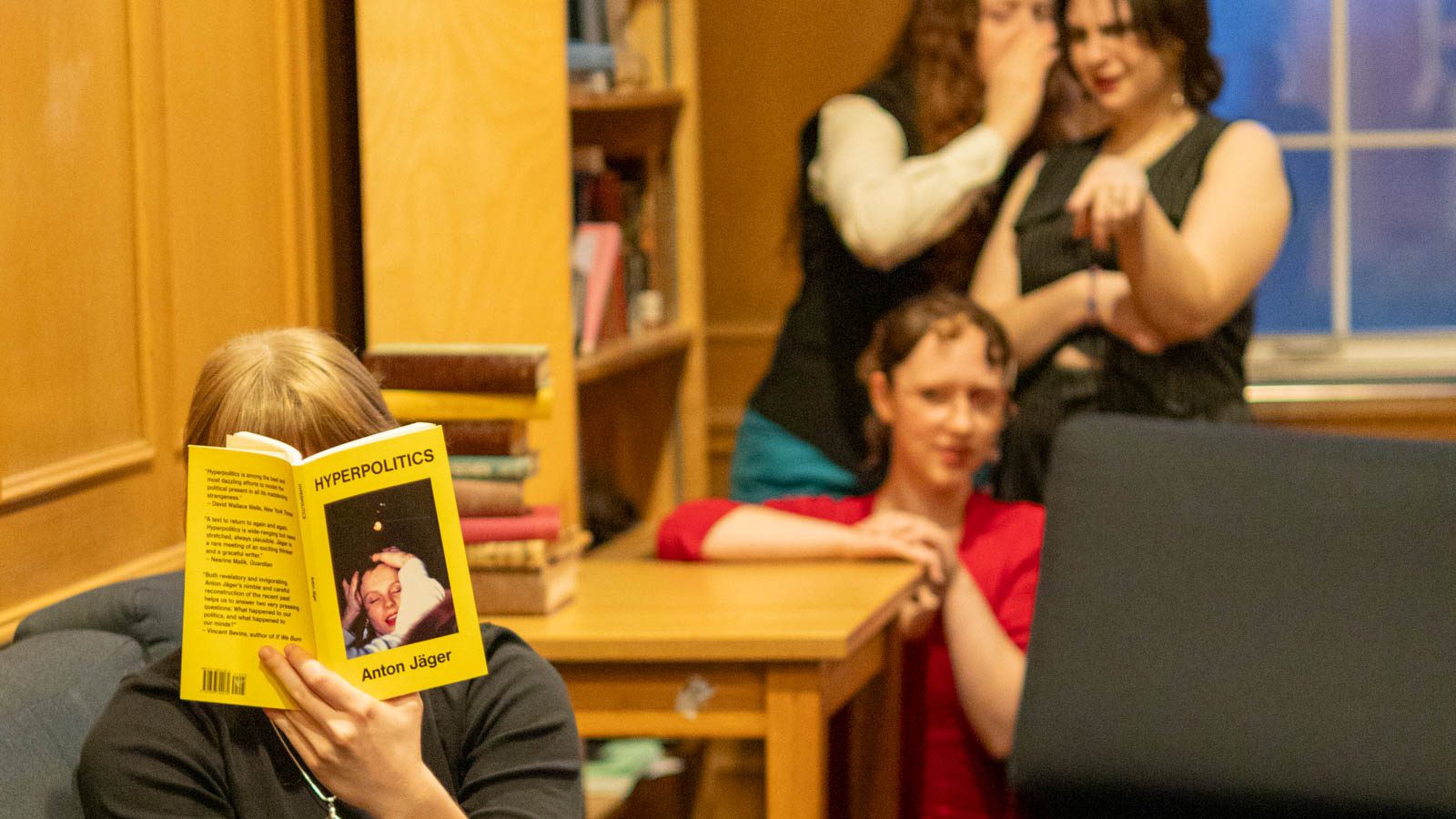
After checking the transit app, confronted by the realization that the city’s public transit system has once again let you down and at a loss of what to do while you wait for the late bus, you open Instagram or TikTok. What you don’t do is pull out that FYP reading you’re supposed to be doing, or the one book that’s gone neglected in your backpack for months. You know, the one you’re always saying you’re going to read, if only you had just a couple minutes in between classes.
You don’t pull out the book because that’s too performative — and though you may be a student at King’s, you will NEVER be a “performative man.”
You’re different; you read [The Bell Jar] because you genuinely [like] Sylvia Plath. But if you pull out your copy on a crowded bus, people won’t jump to the obvious conclusions about your clear and genuine interest in literature; they’ll just think you’re performative.
This is becoming a problem. By not reading, we are forgetting how to read. In the 2024-2025 school year, 67 per cent of Grade 8 students performed at the expected reading level according to the Nova Scotia Education & Early Childhood Development. The website dates these tests back to the 2021-2022 school year, where 69 per cent of Grade 8 students performed at the expected reading level..
While a two per cent decline might not seem substantial, it’s fair to say that any downtrend amongst literacy rates is alarming. It’s difficult not to attribute this concerning trend to our society’s increasing disinterest in reading.
We as a society have lost the simple art of reading at a cafe or on a park bench. We have lost the art of not so subtly staring at someone while they are reading, waiting for them to shift positions so that we might finally glimpse the title of their book. To stop reading means losing the ability to look at our friend and whisper: “I read that.”
Maybe people are reading in the privacy of their own homes — but why? Have we made reading in public so embarrassing that everyone has stopped doing it? And what does that mean for our society in the long term?
Based on the short-term results, things aren’t looking good. With the rise of AI and ChatGPT, people are no longer reading their assigned texts in order to write an essay; instead, they leave the fresh, uncracked book on their desk while they feed an essay prompt into ChatGPT.
Our collective illiteracy has gotten to a point in which we have even lost the art of SparkNotes; instead, many people simply read the AI overview, assuming that it will provide them with enough information to adequately discuss texts such as Dante’s [Divine Comedy]. Listen, I understand not being able to get to every single FYP-assigned reading—in fact, I have yet to talk to a FYP graduate who [has] read every text. But the vast majority of people have at least relied on real people’s summaries.
I know reading has become performative. People are too scared to pull out their books on the bus, wary of being called a poser. But what we should be even more scared of is becoming illiterate.
But King’s, I’m here to say: this is not who we are. We’re King’s students; we were [born] to be pretentious. We throw Dante parties. We talk about Nietzsche and Heidegger as though we truly understand their philosophy (and if we really are pretentious, we tell our tutorial all about how we agree with their philosophy). When we go home for the holidays in December, we will tell our extended families all about how vigorous FYP is, and how smart we are for doing it (while leaving out the C we got on our first essay).
While our communally inescapable pretension might seem annoying to our fellow universities’ student bodies, we are only like this because we want to learn — and that is, undeniably, a good thing. So what if it looks performative? If someone judges you for that, that just shows how little reading they do.
Embrace the performativeness, and embrace the pretentiousness, because reading classic literature is the kind of practice FYP fosters, and that’s a good thing. And if someone judges you for it? Let them.


