
When I tell people I am from Quebec, they often signal sympathy or disgust. And look, I get it. Quebec is nothing if not controversial.
This controversy is set to continue, as the new year seems to promise Quebec’s full return to nationalist ideology; the separatist Parti Quebecois is leading in the polls ahead of this fall’s provincial election. If he wins, Paul St-Pierre Plamondon, the party’s leader, has promised to hold a referendum to see if Quebeckers want to separate from Canada.
Canada has gone through this before — twice — though not in most of our lifetimes. The second and most recent Quebec referendum was held in 1995, with the side voting to stay in Canada only winning by about one per cent. And though I have not yet witnessed a referendum, I am no stranger to the Quebec-Canada, French-English, love-hate relationship.
I was born in Montreal, but moved to Chelsea, Que., just before kindergarten. Chelsea is uniquely situated relative to the French/English divide in Quebec, located 20 minutes from Parliament Hill in Ottawa and densely populated by public servants, anglophones and francophones alike.
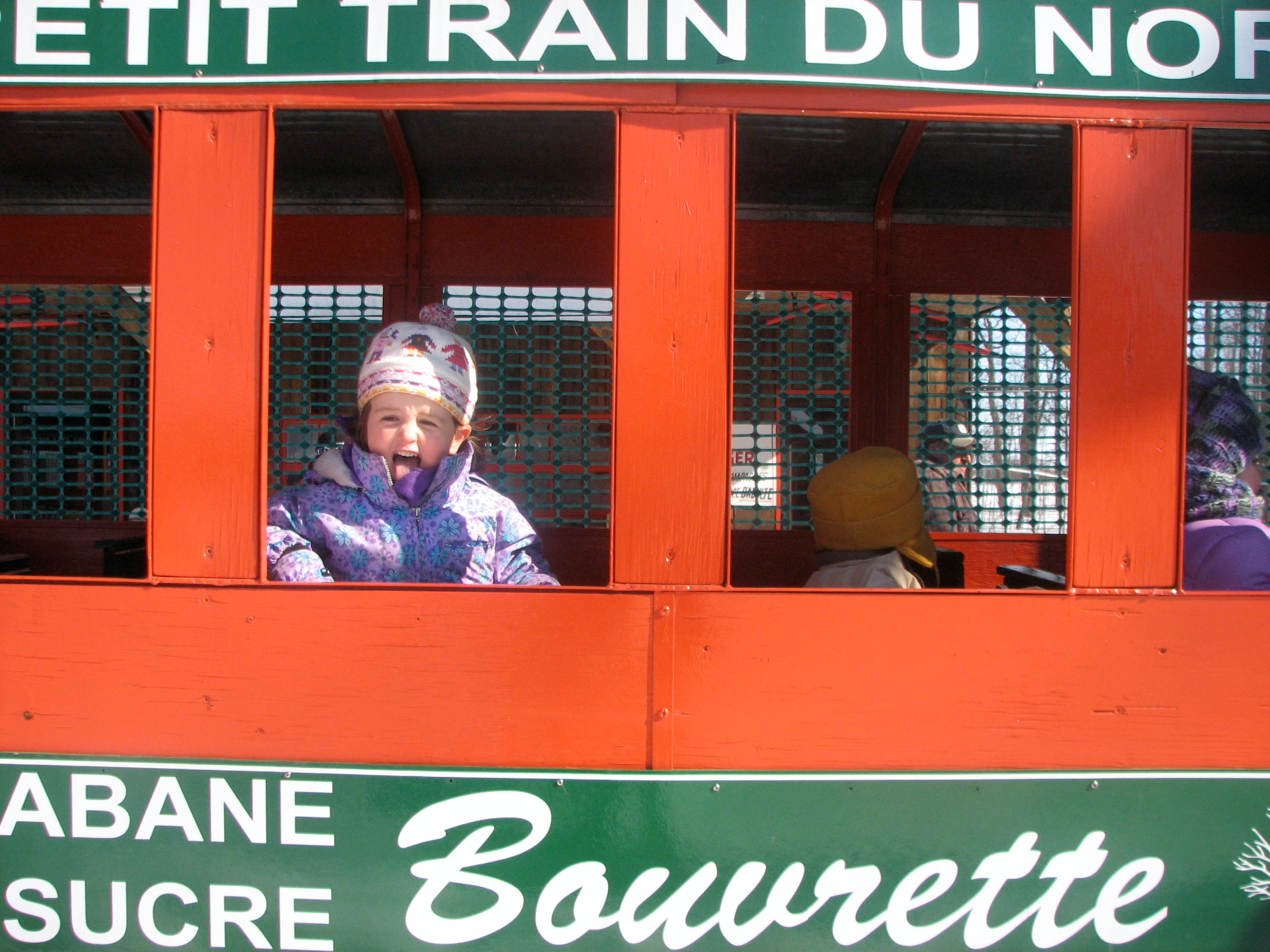
My parents, wanting me to learn the language, sent me to Chelsea’s French school. It was the quintessential Canadian school, with acres of forests behind the building that hosted hundreds of maple trees and a “cabane à sucre,” a sugar shack. In the late winter and early spring, for our gym classes, students were sent out to tap the trees and collect the maple sap.
Canadians and maple syrup are intrinsically linked in the eyes of the world. But at my school, we were taught about its significance in Quebec’s culture and history. Canada was an afterthought.

Speaking English was strictly prohibited. Struggling in my second language, I was sent to daily “Francisation” classes, where English kids could catch up. After a while, I understood French, but struggled to speak. I was afraid to mess up and be shamed by my very-proud-to-be-Québécois teachers, which had and would continue to happen until I ultimately changed to the English school in fourth grade.
One day, a teacher of mine heard me whispering to a friend in English. He scolded us. “Il faut protéger la langue française. Elle est en voie de disparition,” — we must protect the French language. It is going extinct. The kids around me argued back. “But what about France? Belgium? Haiti?” Our teacher dismissed them. It took me a few years to understand he was not talking about French as a language; he meant Quebec culture was under threat, and the French language was its primary defensive force.
Quebec’s nationalist leanings are complicated and sometimes hard to understand, especially for outsiders. I see many negative aspects to it, some of which I’ve experienced first-hand. Though I went to the French school to learn, I often felt shamed by those who were meant to teach me. For a long time, because I was not French, I did not feel like I belonged.
But Quebec, for all its faults and failures, has a beating heart. For one, it’s home to stunning natural beauty. Be it Gatineau Park, the Chaudière Falls, the Saguenay Fjord, the Mingan Archipelago National Park Reserve or Gaspesie National Park, there are endless sights to see and trails to hike. The culture churns out world class artists — actors, musicians, film makers, architects, sculptors, animators or creatives in between. And Quebeckers’ strong cultural heritage is what enables this, with the government throwing money at the arts to preserve the culture. It is also a leader in renewable energy creation, with Hydro-Québec delivering world-renowned clean electricity that is very affordable compared to the rest of Canada.
Beyond that, Quebec is essential for Canada’s perception of itself. If you look at Quebec’s history, and the history of Canada, culture and language are inextricably linked. By 1969, when Canada officially adopted its policy of bilingualism, French had been spoken within the bounds of the country long before its borders had ever existed. But, in my opinion, it is the cleavage between French and English that defines the identities of many French-Canadians, including Quebeckers, and the cultural identity of Canada itself. Neither the province nor the country knows who they are without it.
When I decided to leave Quebec for King’s in 2022, I underestimated how much I would miss it. When I started working in the tourism industry, I encountered Quebeckers more frequently, and would immediately recognize them by their accents. It felt like a breath of fresh air. I would always speak back to them in my own Quebec French, accent and all. No one has ever been as excited to see me as they consistently were: they saw me as a fellow Quebecker, a welcome surprise in the far away land of Nova Scotia. And, though I spent many years feeling othered for being English, in those moments, I finally felt like I was proud to be Québécoise.
For all the divisiveness it sows, La Belle Province can indeed be beautiful. And I hope it stays Canadian, too.