
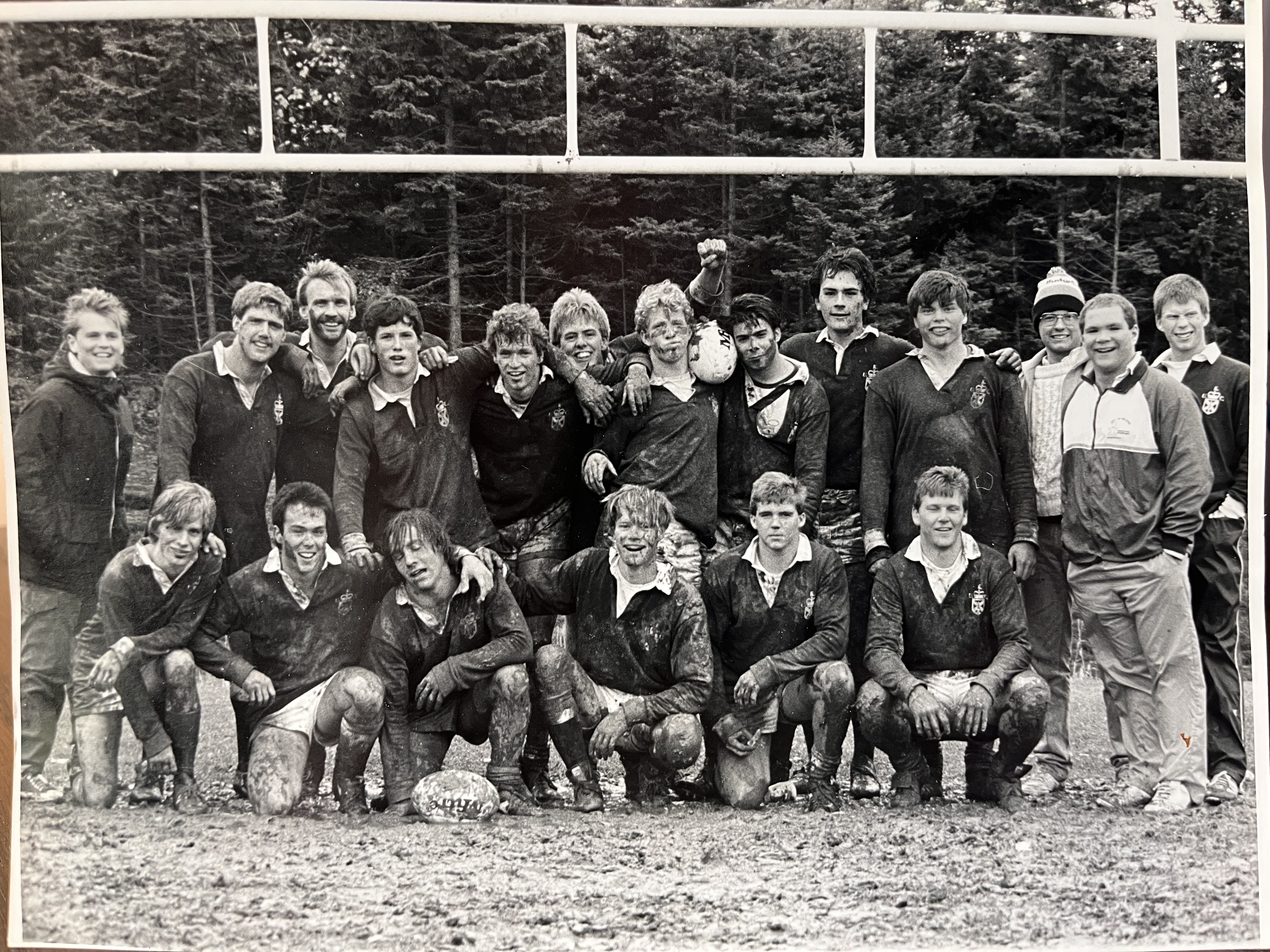

It’s a peaceful September evening on the King’s campus, very quiet for most. But behind the closed doors of Prince Hall, laughter and voices saturate the air as staff, rugby alumni and rugby student athletes come together to celebrate the 40th anniversary of rugby at King’s.
Fond memories and sweet blueberry cheesecake are passed down the table as old friends reunite and new faces are introduced. And as the night comes to a close, King’s rugby alumni, Steve Lenihan, shares a heartfelt message with his peers.
“What all of us shared was our love of sport, love of King’s and love of each other,” said Lenihan. “We were not just teammates, but a brotherhood and a sisterhood, and that has lasted decades already.”
The ensemble of voices is now silent, and as Lenihan continues, his next words bring a few to tears.
“To those who could not make it tonight, you are missed,” he said. “And to those who have passed away — sadly too many to mention — we miss you.”
“We miss you all,” echoes the crowd. Lenihan raises his glass to the air and alumni and students follow — a small cheer in remembrance of those loved and lost.
For many of the people in this room, rugby is not just a sport. It is a way of life. And this pocket of time has not only reconnected a team, but rejoined a family. This year marks four decades of rugby at the institution, but unknown to most, the legacy of rugby at the university has not only impacted King’s, but so many other institutions across the province.
In 1986, rugby in Nova Scotia was a sport of the few and a sport for the men. There were limited university rugby programs, and most teams played against men’s clubs teams. King’s didn’t have a team of their own, and most of their male students played for Dalhousie.
All this changed one December evening on the third floor of the Arts & Administration Building, formerly home to the King’s library. There, Lenihan and a few of his teammates — then first-year King’s students and Dal rugby players —stumbled across a book that would alter the course of King’s history.
In the midst of its pages, a hidden gem was revealed: there had once been a King’s rugby team and it was a central part of the school’s community. Inspired by the stories pieced together within this special book, Lenihan and his teammates formulated a new plan for their next rugby season: they were going to start a King’s team of their own.
At 19-years-old, Lenihan became the first head coach of the rejuvenated King’s rugby team. A few years later, he joined the board of directors of Rugby Nova Scotia. There, Lenihan requested an official university rugby league, separate from the men’s club teams. This change helped advocate for more equal play amongst rugby athletes across the province.
This change was just the beginning. In the years to follow, many of Lenihan’s female high school pupils were in search of women’s rugby at their own institutions, a call Lenihan hoped to answer with the first women’s rugby team at King’s. There was only one condition: after a year of King’s rugby, their job was to go back and build up women’s rugby on their own campuses – a goal well achieved and evident in the many university women’s teams that exist now. These include both Dalhousie and St Mary’s women’s rugby programs.
Today, Lenihan’s contributions to the evolution of post-secondary rugby has inspired many young athletes to form legacies of their own.
“Rugby has pushed me to face a lot of challenges that I don’t think I would have had in other settings. But those challenges have really built me into the resilient person I am today,” said King’s women’s rugby co-captain Amy Randall.
Randall hopes that King’s continues to foster a culture of inclusivity and embracing new experience, something she’s put into practice over her past few seasons.
“We need to create a space where people can feel like they can mess up and learn, where they have an opportunity to do things they have never done before and not be shunned for it.”
Randall is making the most of her final season at King’s, and as she says her goodbyes, her words mirror those of Lenihan’s — a reminder that King’s rugby is a fellowship one never truly has to leave.
“I’m going to miss that sense of community, but I know that I’m never going to be missing from it. I’m always going to be a part of King’s rugby, in person or not.”


