
Are journalism students making a huge mistake?
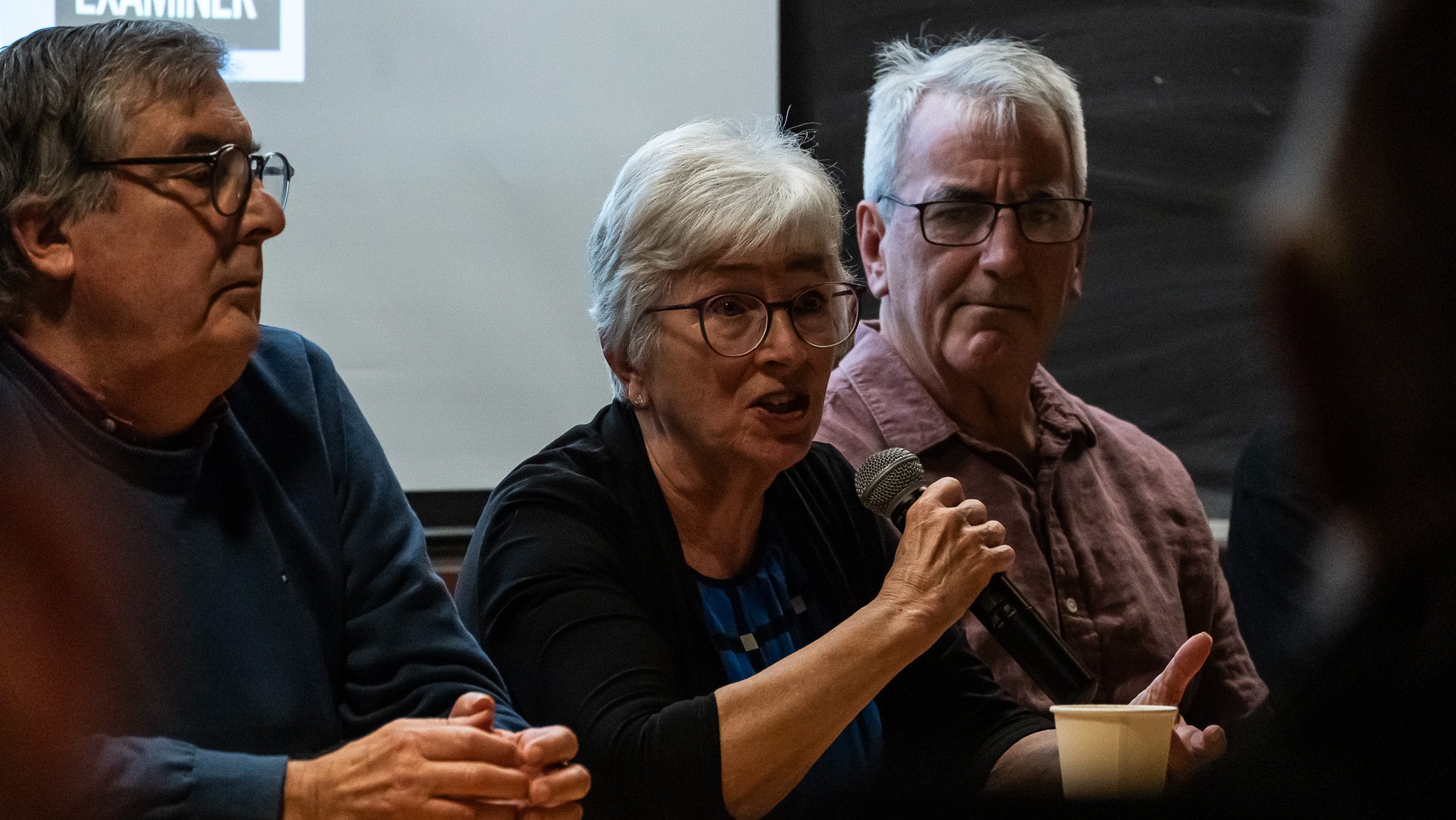
On Oct. 23, 2026, King’s hosted a discussion with reporters from the Halifax Examiner who were forcefully removed from a press-conference about the EverWind data centre development.
Reporters Joan Baxter and Jennifer Henderson said they were not directly invited to the press conference, but went after receiving a tip about the event. When they arrived, a security guard noted they were not on the invitee list, but still granted them entry.
Baxter and Henderson sat with the audience at the press conference. They said they believe it was once they began taking pictures and videos that they were spotted by two event organisers. Other reporters were doing the same. The staff accused them of trespassing and said they had to leave.
“It was nasty, and it was very upsetting. And it was a terrible PR move, of course,” said Baxter at the discussion. “But I did suggest at the beginning, ‘you don’t want to do this,’ ”
“I took hours to stop shaking.”
Baxter and Henderson said that because they weren’t invited to the press conference, they didn’t know there were rules about registration. Media lawyer David Coles said that because the security guard allowed them to enter, the allegation that they were trespassing has shaky legal legs.
Nova Scotia Premier Tim Houston, King-Hants MP Kody Blois, and EverWind founder and CEO Trent Vichie attended the press-conference.
The incident was an obvious attack on the Halifax Examiner, reporters told the audience at the King’s discussion. They believe it’s due to the outlet’s continuous investigative coverage of EverWind ever since the company came to Nova Scotia in 2022.
“They don’t like the fact that we uncovered the fact that [Vichie] donated to Trump’s campaign in 2024 under the name Edwin Hughes. And that he dines regularly with Premier Houston in his luxury Manhattan penthouse apartment,” says Baxter.
Freedom of press, or the lack thereof
Corporations will put in a monumental amount of effort to hide information, especially from media they deem undesirable. Nothing is more undesirable than a network that writes about a premier’s secret meeting with EverWind’s founder.
It is not the first time Baxter has come across corporations “throwing their weight around in Nova Scotia.” She recounted her experience in Sherbrooke in 2019, when she was asked to leave a press briefing, along with a friend. When the friend said something funny in response, the RCMP was called, and “beat the hell out of him.”
That experience was at the front of Baxter’s mind during the confrontation with EverWind, and she was aware of how it could escalate.
“This isn’t the first time we’ve come up against corporations — which are interestingly never local,” said Baxter. “Who have been throwing their weight around in Nova Scotia, and the provincial government allows them to do it,”
Baxter and Henderson had advice for young journalists at the discussion.
“Know the law, know whether you’re trespassing,” said Henderson. “Be polite, try to keep your cool, and make sure to cover yourself.”
What’s in it for us?
Sitting in that conference, listening to all the ways journalism continues to struggle, it’s difficult not to despair.
Journalism students are gearing up to enter an actively hostile landscape, a battlefield job market, and dwindling public trust and respect.
The slow, steady encroachment on press freedom is scary. That’s not to say that in Canada, journalists are regularly killed or imprisoned. Canada consistently ranks highly in global press freedom. But we are far from perfect, and lowering our standards hurts global standards, and hurts Canadians.
By second year, every journalism student has heard the spiel: journalism might be dying, but it’s never stopped being important.
It’s a good sentiment, and one we can agree with. Freedom of the press is a necessity, and the work of keeping the public informed is not something to take lightly.
But to keep going without losing our sanity, there has to be more in it for us.
Every journalist has their own reasons. We have a few of our own.
We feel grateful to be able to meet people who work so hard and deserve to have their stories told. Oftentimes, these are stories we might never have known about otherwise. Journalism teaches us about the world in the most immersive way imaginable.
We get to take these special experiences and write all about them, and share them with the world, for everyone else to see, just as we did.
Students drop from the BJH program like flies. Those who stay have their reasons. Often, it’s that they don’t have prior experience but really, really want to do journalism, and are therefore willing to tolerate yet another lecture on the 5 Ws.
It’s no secret that the King’s journalism program is lacking. If you did not discover this yourself, a journalism student will have complained about it to you. Multiple times, probably.
But beyond our undergraduate education, what awaits us BJs?
A hostile environment, apparently. One where governments and large corporations are slowly chipping away at press freedom.
For anyone who even vaguely cares about the state of Canadian journalism, it is essential that they are aware of the October incident involving the Halifax Examiner and the highly contentious EverWind Fuels Point Tupper data centre.


