
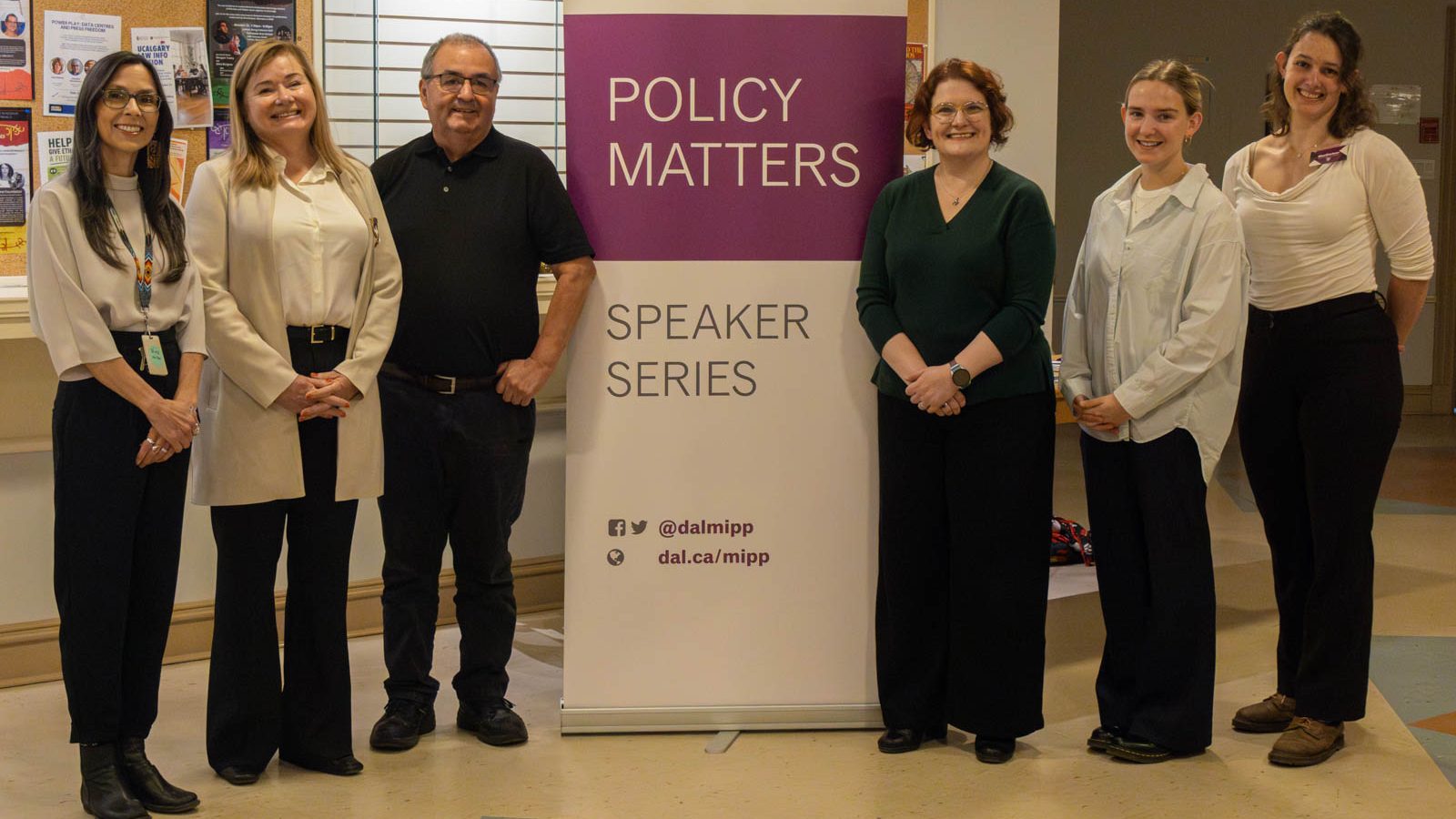
Students, faculty and community members gathered in the KTS lecture hall for a panel on
cannabis coverage on Oct. 23.
Hosted by the MacEachen Institute for Public Policy and Governance, the discussion
featured three panelists bringing their perspective on how Western media frames Indigenous treaty rights and cannabis coverage.
This was the third “Policy Matters” panel out of five this fall. Karina Matys and Hilary Doda are
the organisers of the event with MacEachen Institute, a non-partisan policy hub.
“Cannabis doesn’t always have to be framed as a negative and a source of tension and
conflict,” said panelist and King’s journalism professor Trina Roache. She teaches classes
on decolonizing media and accurately telling Indigenous stories.
Panelists spoke about the tendency in Canadian mainstream media towards framing Indigenous peoples in relation to cannabis through the lens of jurisdictional conflict and illegality. Rarely do they acknowledge inherent sovereignty or economic self-determination.
In a Global News story published in March 2026 about RCMP raids at Mi’kmaw-owned stores, sovereign First Nations dispensaries are referred to as “unlicensed,” “illegal,” or “illicit” operations. Roache says this sort of narrative pushes the assumption that provincial laws are
the default authority.
“We always attribute things that we’re not quite sure of as journalists,” she said during the panel about media misrepresentation. “I think that there’s a lack of recognition of sovereignty in western journalism as a real, tangible thing.”
In the Global News story, staff reporters wrote that “Mi’kmaq leaders have argued they have a
treaty right to grow and sell cannabis.” They did not mention section 35 of the Constitution Act,
1982, which recognizes and protects existing treaty rights for Indigenous self-determination.
“Anytime you get any story on treaty rights, whether it’s cannabis or eels or whatever it is, you have to provide that jurisdictional [and] historical context,” said Roache. “That sort of binary reporting is not helpful and doesn’t address this historical misreporting.”
Panelist John G. Paul is the Executive Director of the Atlantic Policy Congress of First Nations
Chiefs Secretariat in Dartmouth. He works with chiefs in 33 First Nations communities in
Mi’kma’ki to promote change in the policy and programs created by the federal government.
“When you look at jurisdiction, […] you got to own it. And you got to do it in a way that makes sense,” Paul said during the panel. “And my belief is our communities, our people, have been around for 10,000 years. You don’t think we’ve learned something in 10,000 years on how to do things?”
Paul referred to the post-colonial governments as “young governments,” and said Nova Scotia’s Premier, Tim Houston, has not shown any respect for the Mi’kmaq right to self-
determination.
“We did things in a way to live in harmony with nature, and live in harmony with our
communities,” says Paul. “That’s why we’re still here.”
Houston has maintained a strict policy that Indigenous-owned cannabis dispensaries
operating outside the provincial framework are illegal, even claiming last year that some cannabis seized by RCMP officers had traces of fentanyl.
“I’ve talked to people in law enforcement that have told me that they’ve taken illegal cannabis
from unregulated illegal dispensaries and tested it and found that it was laced with traces of fentanyl,” he said at a press conference in December 2025. “ So, you know, sometimes I
hear ‘I don’t buy from the government’s supply because I don’t get the same buzz.’ well that’s
probably why.”
However, Houston’s assertion was later proven unreliable after APTN reporter Angel Moore published an article with an emailed response from the Nova Scotia RCMP saying there was no evidence confirming that they had found any cannabis laced with fentanyl.
“I think that we have a power as journalists to verify and fact-check, to really do stories that are nuanced,” Roache said on the panel regarding the fentanyl claim.
When Doda, the moderator for the panel, asked for their opinions on Houston’s fentanyl assertion, a grimace came across each of the panelists’ faces.
“They are demonizing our people,” panelist Rosalie Francis said. Audience members
nodded their heads.
Francis is a Mi’kmaw lawyer from the community of Sipekne’katik. She runs an Indigenous law firm in Indian Brook, where she specializes in treaty rights, the duty to consult, and Crown engagement and governance development.
She says journalists need to cover more stories from a Mi’kmaw perspective.
“Does anybody ever go interview a Mi’kmaw store owner?” Francis said to the audience. “…You know, there’s real stories there about people.”
Roache said “journalists influence societal attitudes towards reconciliation,” and by not including Indigenous voices in stories about issues Indigenous peoples are facing, they risk misinforming the public.
“The responsibility is big, and we have to do it right.”


